Article: Rooted in Science, BASED in Nature: Why We Stand with the Dublin Declaration & support European livestock farming
Rooted in Science, BASED in Nature: Why We Stand with the Dublin Declaration & support European livestock farming
At BASED Nutrition, our entire philosophy is built on a foundation of veterinary science and a deep respect for nature. Our mission is to create ethically sourced, animal-based nutritional supplements of veterinary-grade quality, produced in Europe with respect for animals, people, and nature. We are, by design, vet-driven.
This means we don't follow fads. We follow the science.
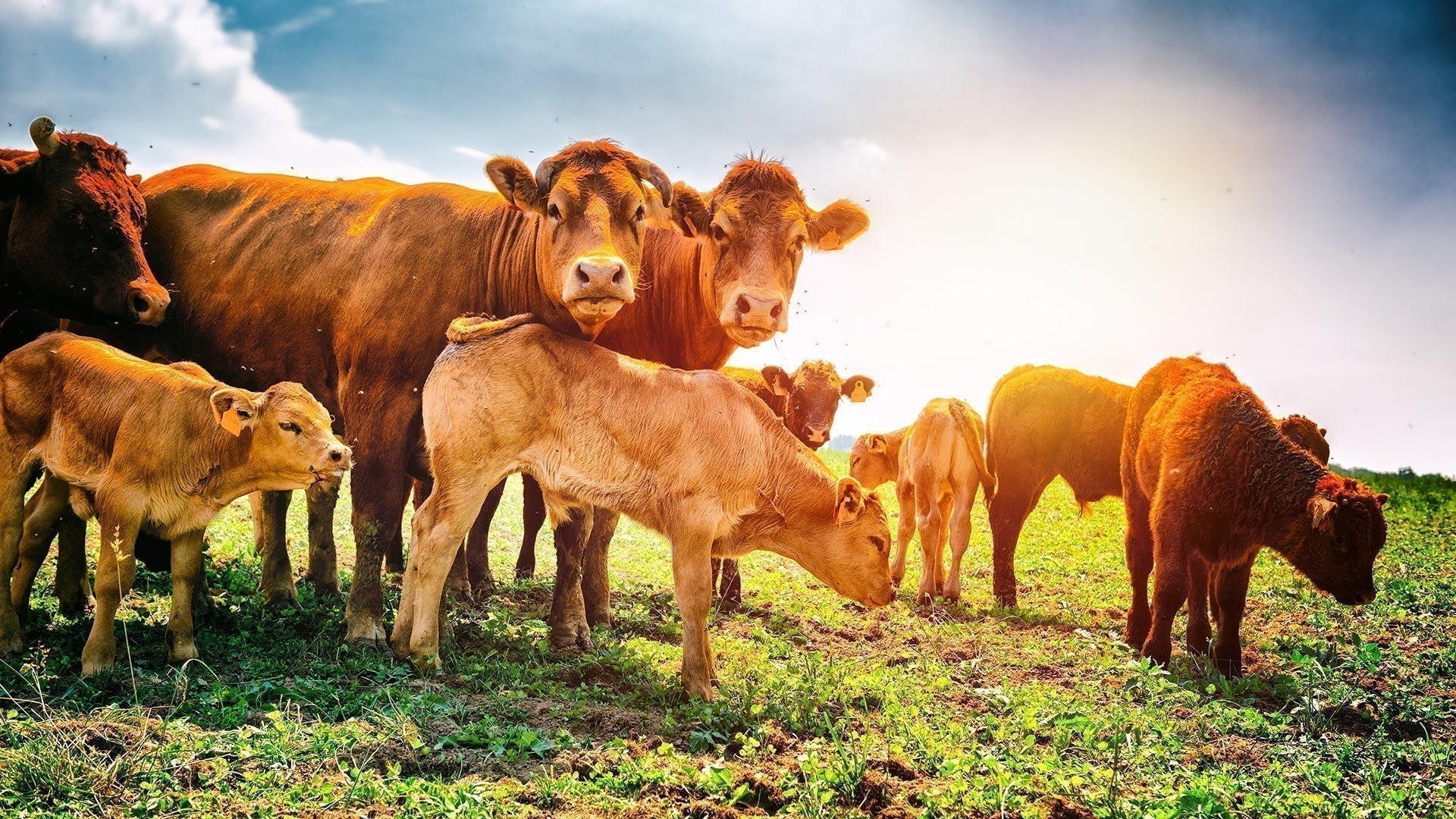
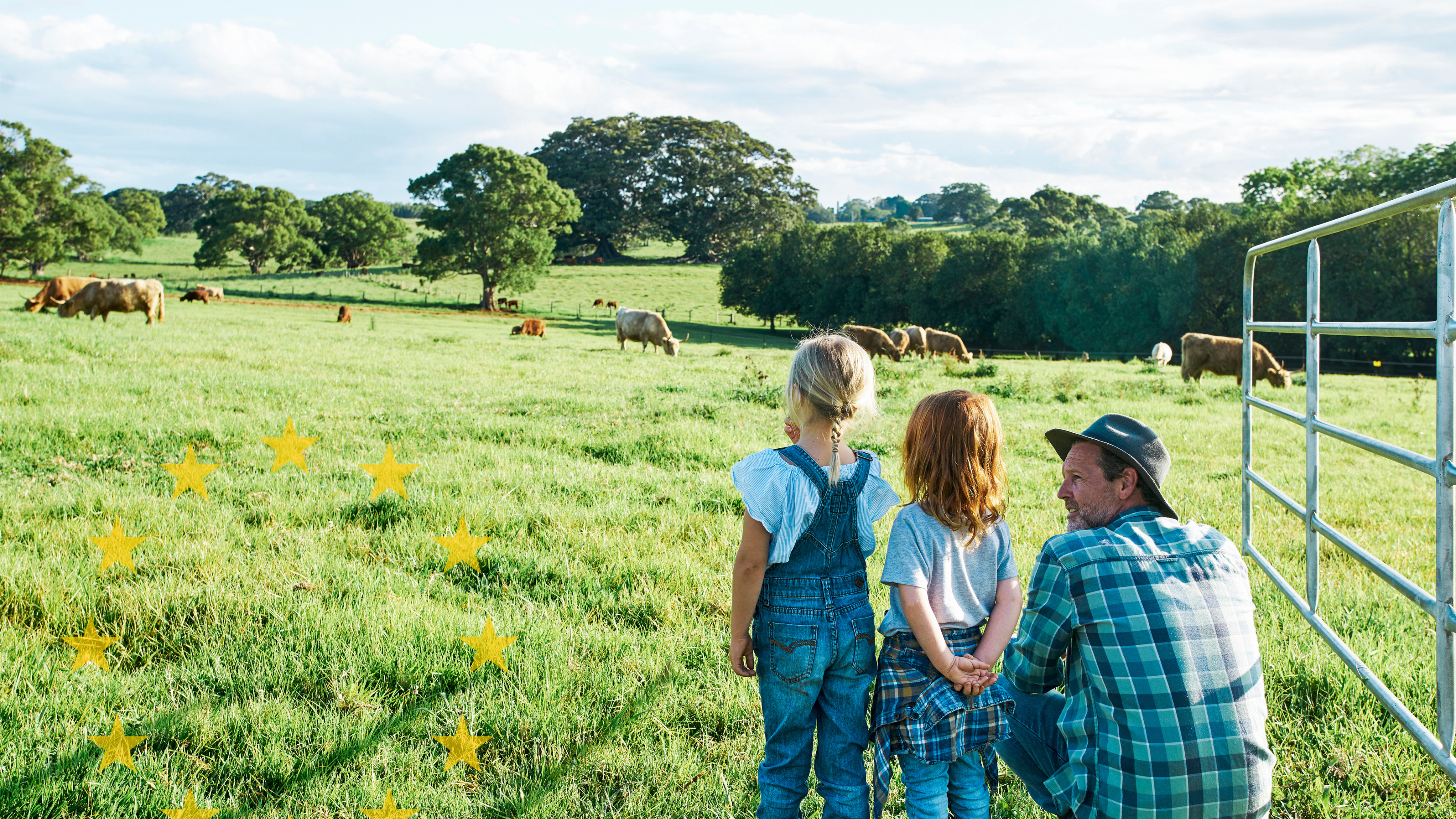
Before livestock became a source of debate, they were the very bedrock of European civilization. For millennia, cattle have shaped our landscapes, our culture, and our prosperity. They were the original tractors that ploughed our fields, the living assets that secured a family's future, and the source of nourishment that built strong communities. This deep, ancestral connection is a heritage worth preserving. From the rolling hills of Ireland to the Alpine pastures, these animals have been our partners in building the continent we know today. To discard this relationship is to ignore the very foundation of our history and food security.
In today's polarized world, this relationship is under threat. The narrative is often simplified to an extreme: "meat is murder," "cows are destroying the planet." This reductionism is not only scientifically flawed, but it's dangerous.
That's why we are proud to stand with the thousands of scientists behind the Dublin Declaration. This document isn't a piece of industry marketing; it's a global consensus statement from scientists in agriculture, nutrition, physiology, and climate science arguing that livestock is "too precious to society to become the victim of simplification, reductionism or zealotry" (The Dublin Declaration, 2023).
The Declaration makes three essential points that align perfectly with our core purpose at BASED:
-
Nutritional Necessity: Animal-source foods provide complete, bioavailable nutrition. They deliver high-quality protein, vitamins (like B12), and minerals (like heme iron) in a form our bodies absorb and utilize far more efficiently than plant-based alternatives (Van Vliet et al., 2021). For the three billion people globally suffering from nutrient deficiencies, animal-source foods are a critical solution, not a problem.
-
Ecological Role: When managed properly, livestock are irreplaceable in a circular bio-economy. Ruminants, in particular, do something magical: they graze on marginal lands (land unsuitable for crops) and convert inedible cellulose (grass) into the most nutrient-dense food on Earth (Mottet et al., 2017).
-
Ethical Sourcing: The Declaration advocates for systems that respect animal welfare and support rural livelihoods, moving beyond the flawed industrial model.
This is the scientific foundation for why we exist. But we can't ignore the serious accusations leveled against livestock. Let's tackle the three biggest criticisms head-on, armed with the science championed by the Declaration.
The Elephant in the Room: Addressing the Criticisms
It's crucial to state this upfront: We agree that industrial factory farming can be flawed. It is often ethically bankrupt and environmentally problematic. But as the Declaration's scientists argue, "one-size-fits-all agendas" (like total abolition) are the wrong answer. The solution isn't no livestock; it's better livestock and sustainable systems.
Criticism 1: "Cows are destroying the climate with methane!"
This is the most common and most misunderstood argument.
The Rebuttal: The Biogenic Methane Cycle
There is a fundamental difference between the methane (CH₄) from a cow and the carbon dioxide CO₂ from a car.
-
Fossil Fuel CO₂: This is new carbon, dug up from the earth where it was trapped for millions of years. It is a one-way street into the atmosphere, where it lasts for 1,000+ years, accumulating and trapping heat.
-
Biogenic Methane CH₄: This is recycled carbon, part of a short, 12-year cycle.
-
A plant absorbs CO₂ from the air via photosynthesis.
-
A cow eats the plant.
-
The cow burps methane CH₄.
-
After ~12 years, that methane breaks down in the atmosphere and becomes CO₂ and water again.
-
That same CO₂ is re-absorbed by the grass, starting the cycle over.
-
As long as herd sizes remain stable, this system is in balance. It is not adding new carbon to the atmosphere in the same way burning fossil fuels is (Allen et al., 2018). Furthermore, well-managed grazing in a regenerative chain can improve soil health and even sequester more carbon back into the ground.
Criticism 2: "Livestock use all our land and water!"
The Rebuttal: The Magic of Marginal Land
You'll see statistics that livestock use ~70% of all agricultural land. This is true, but incredibly misleading. The vast majority of that is pasture, or "marginal land." This is land that is too rocky, too hilly, or has soil too poor to grow crops for human consumption.
This land's only agricultural purpose is to grow grass. Humans cannot eat grass. But cows, sheep, and goats can.
These animals are nature's ultimate "upcyclers." They take an unusable resource (cellulose) on unusable land and transform it into the most bioavailable, nutrient-dense protein on the planet (Mottet et al., 2017). This isn't a waste of land; it's the valorisation of it.
Criticism 3: "Red meat causes cancer and heart disease!"
The Rebuttal: Processed vs. Unprocessed & Correlation vs. Causation
This claim is based almost entirely on epidemiological (observational) studies, which can only show correlation, not causation. These studies often fail to distinguish between two very different categories:
-
Processed Meat: (e.g., hot dogs, salami, cured meats). The data is strong that a high intake of these is linked to poor health outcomes.
-
Unprocessed Red Meat: (e.g., a steak or a piece of liver). Here, the evidence is weak, mixed, or shows no link at all (Johnston et al., 2019).
Lumping a grass-fed heart supplement in with a preservative-laden sausage is bad science. Our clean-label products, sourced from ethically-raised animals, are a world apart. Animal-source foods are not a "risk" to be managed; they are the functional superfood that built humanity.
Our Conclusion: The BASED Commitment
The Dublin Declaration provides the scientific validation for what our vet-driven team has always known: animals are essential for a healthy human and a healthy planet.
The debate should not be if we have livestock, but how we raise them.
At BASED Nutrition, our answer to "how" is clear and uncompromising.
-
We are Ethical: We reject the industrial model with only financial gain in mind. We are building a sustainable and ethical chain by sourcing only from small-scale European farms that respect animal welfare, biodiversity, and soil health.
-
We are Nose-to-Tail: We use meat, organs (like liver and heart), and colostrum. This philosophy honors the animal by using every part, and it provides you with a spectrum of unique, bioavailable nutrients (like CoQ10 from heart and Vitamin A from liver) that are missing from a muscle-meat-only diet.
-
We are Transparent: We are not anonymous blends, but real ingredients traceable to the source.
We are not just selling supplements. We are supporting the agricultural system that the Dublin Declaration's scientists are fighting to protect. We are providing the ancestral fuel that respects the animal, regenerates the earth, and is, above all, BASED in science.
References
- The Dublin Declaration (2023). The Societal Role of Livestock: A Declaration. Available at: https://www.dublin-declaration.org/
- Allen, M. R., et al. (2018). A solution to the misrepresentations of CO2-equivalent emissions of short-lived climate pollutants. Nature Climate Change.
- Mottet, A., et al. (2017). Livestock: On our plates or eating at our table? A new analysis of the feed/food debate. Global Food Security.
- Van Vliet, S., et al. (2021). A meta-analysis of randomized controlled trials comparing the effects of animal versus plant protein on muscle mass and strength. The Journal of Nutrition.
- Johnston, B. C., et al. (2019). Unprocessed Red Meat and Processed Meat Consumption: Dietary Guideline Recommendations. Annals of Internal Medicine.